By The EasyWebSight Desk
From Little Marco to Small in Size Trump
From the Personal Insults of the 2016 Republican Primaries to the Responsibilities of American Leadership, the Trump–Rubio Political Reversal Raises Questions About Ego, Diplomatic Stature, and the Difference Between Projecting Power and Earning Respect.
American politics has produced its share of unlikely alliances, but few illustrate the transformation of political rivalry into political partnership quite like the relationship between Donald Trump and Marco Rubio.
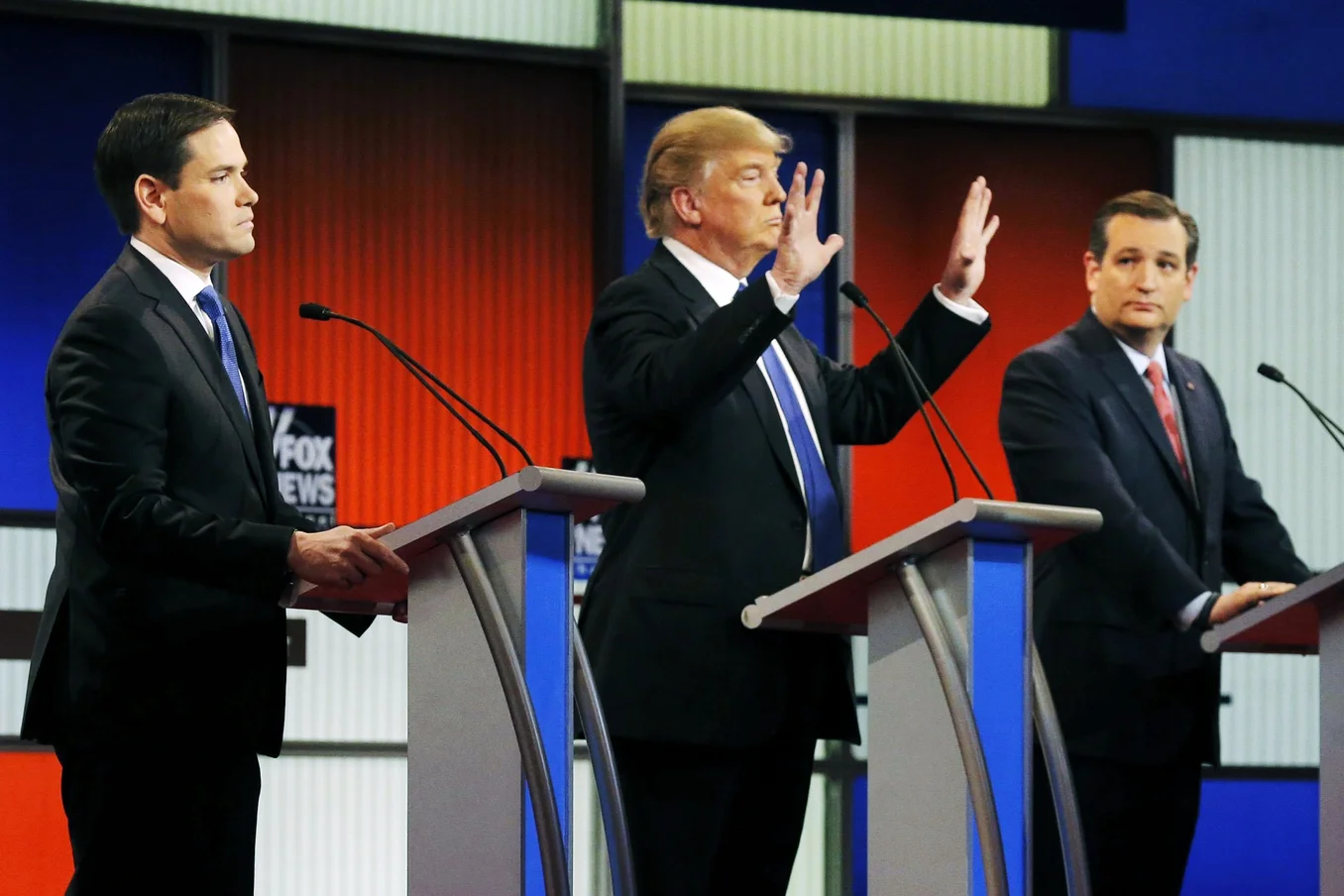
In 2016, the two men exchanged personal insults during a Republican presidential primary campaign that frequently resembled a contest of egos rather than a debate over national policy.
Trump repeatedly mocked Rubio as “Little Marco,” a nickname designed to portray the Florida senator as an insignificant political opponent.
Rubio eventually responded with an insult of his own.
At a campaign rally in Salem, Virginia, on February 28, 2016, Rubio acknowledged that Trump was taller than he was but questioned why Trump's hands appeared unusually small for someone of his height.
Then came the punchline:
“You know what they say about men with small hands? You can't trust 'em.”
The remark, delivered to an amused audience, became one of the most widely discussed exchanges of the Republican primary campaign.
It was political theater at its most personal.
And it established something worth remembering: Trump was not the only participant willing to use physical characteristics as instruments of political ridicule.
Rubio, too, had embraced the politics of personal humiliation.
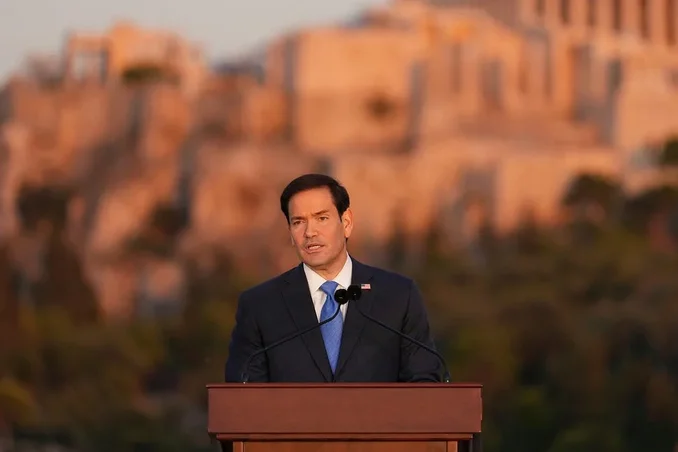
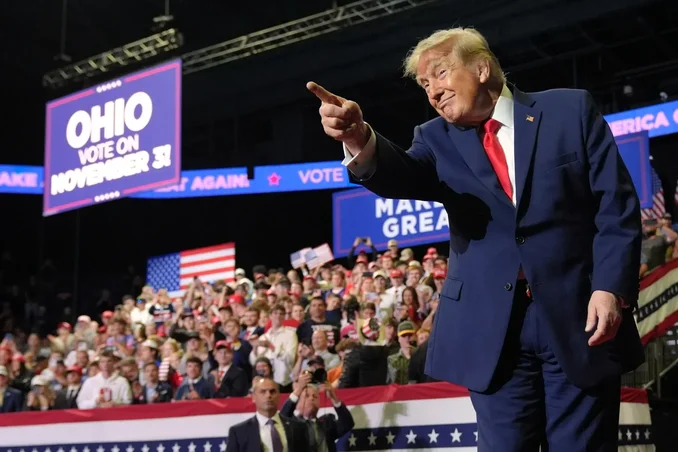
A decade later, the former rivals occupy two of the most consequential positions in American government: Trump as president and Rubio as secretary of state.
The politician once dismissed as “Little Marco” now represents the United States in negotiations with foreign governments, while the man whose hands Rubio mocked presides over the nation's foreign policy.
The reversal invites a satirical observation.
If Trump could call Rubio “Little Marco,” then Rubio's own 2016 remarks provide the historical inspiration for an equally pointed expression:
“Small in Size Trump.”
The phrase, also reflected in the satirical domain smallinsizetrump.com, is not a quotation from Rubio or a factual claim about Trump's physical dimensions.
It is a contemporary editorial characterization inspired by Rubio's documented joke—and an invitation to reconsider what political size and stature actually mean.
Because the real question was never whose hands were larger.
It was whether either man understood that political greatness requires something more substantial than making an opponent appear small.
When Political Insults Become Political Alliances
The reconciliation between Trump and Rubio illustrates a familiar feature of American politics: yesterday's bitter adversary can become tomorrow's indispensable ally.
Political circumstances change. Rivalries fade. Former opponents discover shared interests, ideological priorities, or opportunities for cooperation.
There is nothing inherently improper about that transformation.
Indeed, political reconciliation can demonstrate maturity when individuals move beyond personal grievances to pursue common objectives.
But the Trump–Rubio relationship raises a different question.
What happens when the language of personal dominance that once defined a political rivalry becomes part of the governing style of the administration those former rivals now lead?
Rubio's responsibilities as secretary of state demand qualities that campaign insults rarely demonstrate: patience, diplomatic judgment, discretion, and the ability to communicate with governments whose interests do not always coincide with those of Washington.
Trump's responsibilities as president are broader still.
Neither office can be effectively reduced to a competition over who appears tougher, commands louder applause, or delivers the most memorable insult.
Yet modern political culture frequently rewards precisely those performances.
The danger is not simply that politicians insult one another.
It is that audiences may begin to confuse the ability to humiliate an opponent with the ability to govern effectively.
A cutting nickname can dominate a news cycle.
It cannot negotiate a security agreement, resolve a trade dispute, or persuade an ally to accept difficult compromises.
The Politics of Size, Strength, and Superiority
The expressions “Little Marco” and “Small in Size Trump” reveal something about the symbolic language of political competition.
Size becomes a metaphor for power.
Height becomes a substitute for authority.
Dominance becomes confused with competence.
But physical characteristics offer no meaningful measure of political judgment.
A tall leader can make poor decisions. A shorter leader can demonstrate extraordinary courage, intelligence, and diplomatic skill.
The same is true of political rhetoric.
A leader who speaks loudly is not necessarily persuasive. A politician who insults opponents is not necessarily strong. A government that repeatedly proclaims its greatness is not necessarily demonstrating it.
Political stature is not measured in inches, applause, or the sharpness of an insult.
It is measured through judgment, credibility, accountability, and the consequences of decisions.
Rubio's 2016 joke was effective as political theater because it turned Trump's own language of personal belittlement against him.
But the underlying logic remained the same.
Both men participated in a rhetorical contest in which diminishing an opponent became a way of asserting personal superiority.
The irony is that neither insult tells Americans much about the qualities required to lead the country.
“Little Marco” does not explain Rubio's diplomatic judgment.
“Small in Size Trump” does not establish Trump's competence or incompetence as president.
Both expressions are reminders of how easily politics can become a spectacle of personalities rather than an examination of public responsibilities.
Make America Gloat Again
The slogan “Make America Great Again” presents national greatness as a political objective.
Supporters understand it as a promise to restore economic strength, national sovereignty, security, and American influence.
Critics question whether the movement's emphasis on national strength sometimes encourages a political culture more interested in asserting superiority than demonstrating effective leadership.
That distinction gives rise to the satirical phrase:
“Make America Gloat Again.”
Gloating is not the same as confidence.
Confidence rests on achievement, preparation, and the ability to exercise power responsibly.
Gloating depends on the satisfaction of appearing superior to someone else.
The difference matters in domestic politics, but it becomes particularly consequential in international affairs.
A president may criticize another country's policies without diminishing that country's dignity.
A secretary of state may challenge an ally's decisions without portraying the ally as fundamentally inferior.
A government may defend its national interests without treating cooperation as weakness.
These distinctions are central to the exercise of diplomatic power.
Supporters of a more confrontational American foreign policy argue that blunt criticism can expose imbalances, challenge complacency, and pressure allies to accept greater responsibility for their own security.
Those arguments deserve consideration.
Diplomacy does not require constant agreement or unconditional praise.
But critics of confrontational diplomacy raise a different concern: when political leaders rely excessively on public ridicule or declarations of superiority, they risk making cooperation more difficult.
An ally may accept a difficult demand because it serves a shared strategic interest.
It is less clear what additional benefit comes from making that ally feel publicly humiliated.
A nation does not become stronger merely by announcing that another nation is weaker.
Little Marco's Diplomatic Test
Rubio's transition from presidential candidate to secretary of state offers an opportunity to examine the difference between political performance and diplomatic responsibility.
In 2016, his objective was to defeat Trump in a Republican primary.
Personal criticism was part of that competition.
As secretary of state, however, Rubio's responsibilities extend beyond electoral rivalry.
He must represent American interests to foreign governments, communicate administration policy, and participate in the management of relationships that can affect international security and economic stability.
The standards are different.
A campaign audience may reward a clever insult.
A foreign government is more concerned with whether an American commitment is credible, whether an agreement will be honored, and whether Washington's representatives possess the authority to negotiate effectively.
This is where the nickname “Little Marco” acquires a new irony.
The man once portrayed as politically insignificant now holds an office through which American influence is exercised around the world.
But the office alone does not establish diplomatic stature.
That must be demonstrated through performance.
Rubio's effectiveness should be evaluated through his decisions, negotiations, policy outcomes, and ability to represent American interests—not through a nickname assigned by a former political rival.
The same standard should apply to Trump.
Small in Size Trump: The Difference Between Dominance and Leadership
The phrase “Small in Size Trump” works as political satire because it reverses the logic of Trump's earlier insult.
It takes a form of ridicule once directed at Rubio and redirects attention toward the president who popularized the nickname.
But the phrase becomes more meaningful when understood metaphorically rather than physically.
In political life, smallness can describe a narrow conception of leadership—one in which personal recognition matters more than institutional responsibility, public confrontation takes precedence over persuasion, or political victory becomes an occasion for humiliating opponents.
That is an interpretation of leadership, not a factual judgment established by anyone's height or hands.
The question is whether particular decisions and conduct demonstrate those tendencies.
Trump's supporters often describe his confrontational approach as a deliberate rejection of conventional political language. They argue that his willingness to challenge established practices enables him to demand concessions that more traditional politicians might hesitate to seek.
Critics interpret some of the same behavior differently, arguing that personal attacks and public displays of dominance can distract from policy objectives and undermine relationships.
The disagreement is substantive.
It should be examined through evidence, actions, and results rather than settled through competing insults.
Rubio's 2016 joke therefore offers a useful reminder.
If physical size cannot establish trustworthiness, neither can the performance of toughness establish diplomatic competence.
A president's political stature depends on what presidential power accomplishes.
When the Strongest Nation Needs Friends
The United States possesses enormous military, economic, technological, and diplomatic resources.
Those resources give Washington considerable influence.
But influence is not identical to unilateral power.
America's relationships with European allies, Asian partners, and international institutions involve shared interests, negotiated commitments, and sometimes difficult disagreements.
A government can possess substantial power while still benefiting from cooperation.
Indeed, many of the most consequential challenges in international affairs—including military security, economic competition, technological development, and global instability—require sustained relationships between countries.
The relevant question is not whether America should defend its interests.
Of course it should.
The question is how those interests are best advanced.
Sometimes effective leadership requires confrontation.
Sometimes it requires compromise.
Sometimes it requires the willingness to recognize that another government has legitimate interests of its own.
The ability to distinguish among those circumstances is a more meaningful measure of diplomatic stature than any public declaration of national superiority.
Strength is not diminished by cooperation, and leadership is not established through humiliation.
The Irony of Two Former Rivals
Perhaps the most revealing aspect of the Trump–Rubio relationship is how little the personal insults of 2016 ultimately determined their political future.
Trump called Rubio “Little Marco.”
Rubio mocked Trump's hands and questioned his trustworthiness.
Both men eventually moved beyond their rivalry to participate in the same administration.
Their reconciliation demonstrates that political insults do not necessarily create permanent divisions.
But it also exposes the limitations of the insults themselves.
If “Little Marco” was once presented as evidence that Rubio lacked the stature to lead, how should Americans interpret his subsequent appointment to one of the country's highest offices?
If Rubio's joke about Trump's hands was intended to undermine his rival's credibility, what does their later political partnership say about the significance of that exchange?
The answer may be that neither insult was ever a serious measure of leadership.
Both belonged to a political performance designed to attract attention, entertain supporters, and diminish an opponent.
The greater irony is that the two men now share responsibility for decisions whose consequences are far more significant than the personal rivalry that once separated them.
Their political history offers a reminder that campaign theater and governing responsibility operate on very different scales.
Greatness Is Not the Same as Gloating
The enduring lesson of the Trump–Rubio rivalry is not that one politician was physically larger, verbally sharper, or ultimately more successful at delivering personal insults.
It is that political stature cannot be established through ridicule.
A nation may celebrate its achievements without diminishing those of others.
A president may exercise authority without treating every disagreement as a contest of personal dominance.
A secretary of state may defend American interests without confusing diplomatic restraint with weakness.
The phrase “Make America Gloat Again” captures a criticism of political leadership that places excessive emphasis on triumph, recognition, and the public display of superiority.
But the alternative is not national modesty for its own sake.
It is leadership grounded in results.
The United States can pursue economic strength, military security, national sovereignty, and international influence while recognizing that credibility and cooperation remain valuable instruments of power.
The challenge is to distinguish between appearing powerful and using power effectively.
The former may produce applause.
The latter produces consequences that history can evaluate.
And that brings the story back to two men who once argued over whether one was too little and the other's hands were too small.
Neither exchange answered the questions Americans should expect their leaders to address.
What matters is not whether Trump can make Rubio appear small, or whether Rubio can turn the insult back on Trump.
What matters is whether their exercise of power advances the country's interests while preserving the institutions and relationships on which effective leadership depends.
America does not become greater by making others appear smaller.
And political greatness is not measured by how loudly leaders proclaim their superiority, but by what they accomplish with the power entrusted to them.
The question is not whether America can gloat again. It is whether America can lead without needing to.