By The EasyWebSight Desk
Donald Trump disparaged Somali immigrants, criticized Congresswoman Ilhan Omar, and revived disputed claims about Haitian immigrants—raising questions about racial stereotyping and the boundaries of immigration debate.
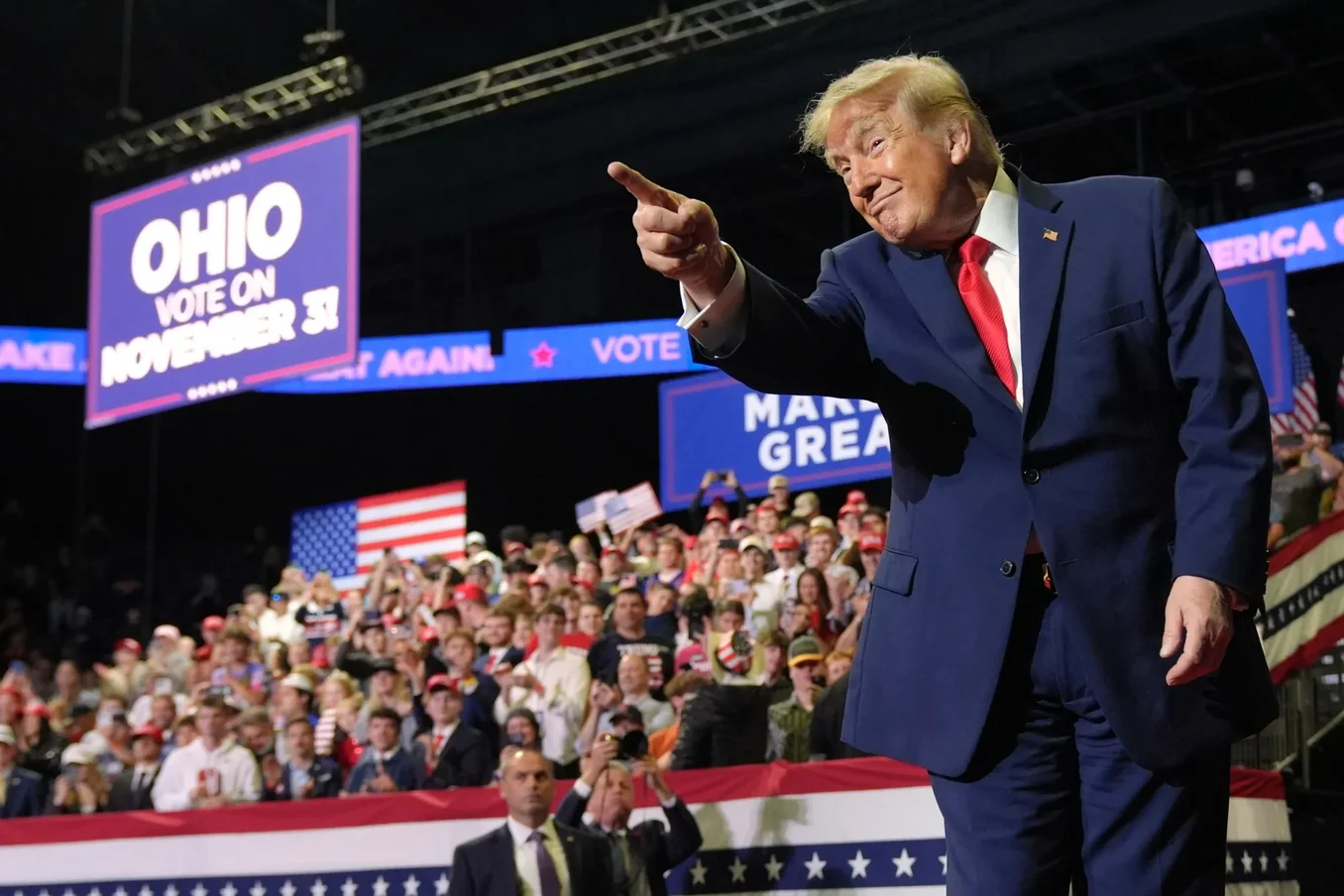
YOUNGSTOWN, Ohio — President Donald Trump used a campaign rally on October 12, 2026, to deliver a series of disparaging remarks about Somali immigrants, including a reference to their intelligence that drew criticism and renewed attention to his rhetoric about immigration.
Speaking in support of Republican candidates ahead of the November midterm elections, Trump described Somali immigrants in Minnesota as beneficiaries of public resources, accused members of the community of widespread misconduct, and mocked their economic circumstances.
At one point, he called them “low-IQ people.”
The remarks were documented in a transcript of the speech and reported by the Associated Press, CNN, and other news organizations.
From Immigration Policy to Attacks on Identity
Immigration has long been central to Trump's political message. His administration has advocated stricter border enforcement, deportations, and restrictions on certain immigration programs.
Those policies are subjects of legitimate public debate. Questions about immigration levels, public spending, crime, and the enforcement of federal law deserve examination through evidence and policy analysis.
But Trump's Youngstown speech went beyond those subjects.
He portrayed Somali immigrants in Minnesota through broad accusations about criminality, dishonesty, and intelligence. He also claimed they were leading purchasers of luxury vehicles despite having arrived in the United States with few possessions.
The speech offered no supporting sales data for that particular assertion.
The distinction between allegations involving specific individuals and claims about an entire immigrant population is important. Criminal investigations and prosecutions can establish individual wrongdoing; they do not establish collective responsibility for everyone who shares a nationality or ethnic background.
Ilhan Omar Becomes a Target
Trump also singled out Democratic Representative Ilhan Omar, who was born in Somalia and later became a naturalized American citizen.
He criticized Omar's country of birth and questioned her invocation of constitutional rights.
His remarks came on the same day that federal agents searched Omar's Washington residence in connection with an investigation reportedly involving immigration paperwork submitted by her late father.
Omar characterized the search as politically motivated. That allegation remains distinct from the question of what investigators may ultimately establish.
The broader constitutional issue is straightforward: naturalized American citizens possess constitutional rights. Those protections do not depend on whether a president approves of their country of origin.
Trump's criticism of Omar also illustrates how disagreements with an elected official can become intertwined with questions about national identity and belonging.
The Return of the Springfield Controversy
The president's remarks extended beyond Somali immigrants.
Trump returned to the controversy surrounding Haitian immigrants in Springfield, Ohio, where he had previously promoted allegations that immigrants were eating residents' pets.
That allegation, repeated during the 2024 presidential campaign, was not substantiated by credible evidence.
At the Youngstown rally, Trump defended his earlier statements and praised the effects of his administration's immigration restrictions on Springfield.
His comments linked two distinct immigrant communities—Somalis in Minnesota and Haitians in Ohio—within a broader political argument about immigration and the direction of American communities.
Critics have characterized this approach as racial scapegoating. Supporters of Trump's immigration agenda, meanwhile, argue that elected officials should be able to address concerns about immigration enforcement, crime, and government spending.
The relevant distinction is whether claims about those concerns are supported by evidence and whether responsibility is assigned to identifiable conduct rather than entire communities.
What the “Low IQ” Remark Reveals About the Debate
The phrase at the center of the controversy raises a question that goes beyond the immediate rally: What happens when political leaders describe a population's intelligence as an inherent characteristic?
Intelligence cannot reliably be inferred from nationality, ethnicity, immigration status, or a person's country of birth.
The challenges Somalia has experienced—including prolonged conflict, political instability, and displacement—are historical and institutional circumstances. They do not establish the intellectual abilities of Somali people.
Likewise, allegations of fraud involving particular individuals cannot establish that Somali immigrants generally engage in fraudulent behavior.
A serious discussion of Minnesota's public-benefits fraud cases would examine the evidence, defendants, charges, convictions, financial losses, and failures of government oversight.
Those facts can be evaluated without making assumptions about an entire immigrant community.
The Political Setting
Trump's speech took place during a campaign appearance intended to support Republican Senator Jon Husted, who faces Democratic challenger Sherrod Brown in Ohio's November 2026 Senate election.
The president also promoted other Republican candidates and announced plans for a submarine-component manufacturing facility in the Cleveland area.
Immigration was one of several issues he used to distinguish Republican candidates from their Democratic opponents.
The rally therefore combined conventional electoral campaigning with rhetoric about immigrant communities outside Ohio.
For political observers, the question is how voters distinguish policy arguments from generalizations about groups of people—and whether those distinctions remain clear when speeches move rapidly between crime allegations, immigration policy, and personal attacks.
A Debate That Requires Evidence
Trump's Youngstown remarks generated controversy because they connected immigration policy to sweeping descriptions of Somali people.
The underlying policy questions remain substantial. Governments must enforce laws, investigate fraud, administer public resources, and determine immigration rules within constitutional and statutory limits.
Those responsibilities also require accuracy.
An allegation against an individual is not evidence against a population. Economic hardship in a country is not a measure of its people's intelligence. And an immigrant's place of birth does not determine the constitutional protections available after becoming an American citizen.
The October 12 rally demonstrated how quickly political debate can shift from evaluating government policies to making claims about the character of entire communities.
The enduring question is whether America's immigration debate can remain focused on laws, evidence, and accountability without reducing millions of individuals to stereotypes about where they came from.