By The EasyWebSight Desk
WASHINGTON, D.C., October 26, 2026 — A name can carry family history, cultural identity, religious meaning, and personal dignity.
For millions of Muslims around the world, Muhammad—and its many spelling variations—is a name associated with the Prophet of Islam.
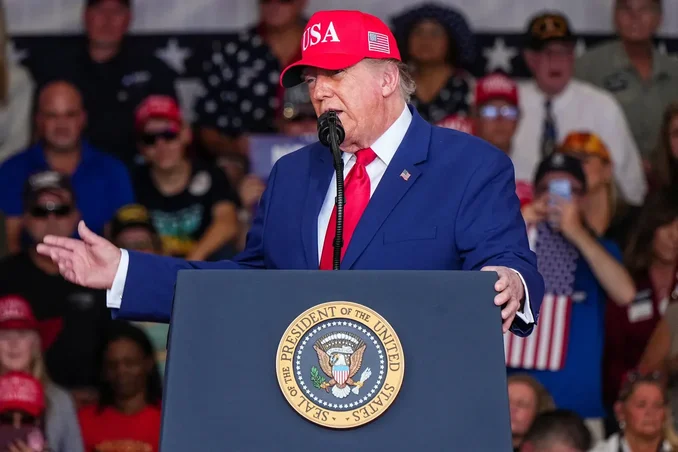
For President Donald Trump, speaking at a campaign rally in Dalton, Georgia, on October 16, it became the subject of a joke about people from the Middle East.
Trump suggested that someone uncertain of a Middle Eastern person's name could simply guess Mohammad, claiming the approach would be correct approximately 65 percent of the time.
He made the remark while discussing Iran's political leadership and imitating conversations with hypothetical people sharing the name.
The audience's response was relatively muted, according to Reuters.
But the controversy did not end at the rally.
On October 19, the Georgia chapter of the Council on American-Islamic Relations publicly condemned the remarks and called on elected officials to respond.
The dispute illustrated how a seemingly brief moment of political humor can become part of a larger argument about religious respect, public responsibility, and the treatment of minorities in American political life.
The Remark That Started the Controversy
Trump delivered his comments at Dalton Municipal Airport during a campaign appearance supporting Republican candidates ahead of the November 3 midterm elections.
His remarks came during a discussion of Iran.
The president joked about the difficulty of finding someone willing to serve as Iran's president and imagined approaching several people named Mohammad.
He also suggested that Mohammad was such a common name in the Middle East that guessing it would usually be successful.
The statement was presented as humor rather than as a formal policy proposal.
That context matters.
Political speeches often include exaggeration, jokes, and improvised remarks.
The president was not announcing a government action or proposing restrictions on people bearing the name.
Nevertheless, the premise of the joke relied on a generalization about a large and diverse population.
The Middle East includes people of many religious traditions, nationalities, languages, and cultural backgrounds.
Not everyone from the region is Muslim.
Not every Muslim is from the Middle East.
And although Muhammad is an exceptionally common name in Muslim communities, its prevalence does not establish the statistical claim Trump made at the rally.
The distinction between an exaggerated joke and an accurate statement should remain clear.
CAIR-Georgia Responds
The backlash became more concrete when CAIR-Georgia issued a public statement on October 19.
The organization characterized Trump's remarks as mockery of a name with deep religious significance.
It called on Georgia's elected officials and political leaders to condemn the comments and defend religious freedom.
The statement also connected the episode to what the organization described as a broader pattern of rhetoric directed at Muslim Americans.
CAIR-Georgia argued that the name Muhammad should not be used as a vehicle for political ridicule.
This was an advocacy organization's interpretation of the remarks, not a legal finding that Trump had violated anyone's rights.
That distinction is important.
Civil rights groups have a legitimate role in identifying language they believe contributes to prejudice.
Political leaders and members of the public are equally entitled to examine whether those criticisms are supported by the words and circumstances involved.
The controversy therefore presents two separate questions.
Was the joke offensive or inappropriate?
And what, if anything, should public officials do when advocacy groups object to such remarks?
The first is a question of interpretation and judgment.
The second concerns political accountability, public debate, and the standards citizens expect from elected leaders.
Why a Name Can Carry Religious Significance
Muhammad is not simply a commonly used personal name.
For Muslims, it is closely associated with the Prophet Muhammad, whose teachings are foundational to Islam.
Parents in many Muslim communities name children Muhammad, Mohammad, Mohammed, or another variation as an expression of affection, respect, or religious tradition.
These spelling differences frequently reflect different systems for transliterating Arabic into English and other languages.
The name is also used by people from numerous countries and cultural backgrounds.
It does not identify a single nationality or political allegiance.
Nor does it indicate whether an individual holds particular views about government, religion, or international affairs.
That diversity matters when a political speaker uses the name as shorthand for an entire region.
The criticism is not necessarily that the name should never appear in comedy.
Names, religions, and cultural practices can all be subjects of humor.
Rather, the dispute concerns the context in which a name is used and whether the humor depends on reducing individuals to a collective stereotype.
The Difference Between Satire and Stereotyping
Political satire has a long history in democratic societies.
Comedians and public figures routinely mock presidents, legislators, religious authorities, and political institutions.
Such humor can expose hypocrisy, challenge power, and encourage public discussion.
Offense alone does not establish that speech should be prohibited.
But humor can also rely on stereotypes.
A joke may portray members of a community as interchangeable, suggest that their identities are inherently amusing, or invite audiences to view cultural differences as evidence of inferiority.
The boundary is not always obvious.
Different audiences can interpret the same remark differently.
Some may hear an exaggerated observation about a common name.
Others may hear a dismissive portrayal of Muslim identity.
Those interpretations can be discussed without assuming that everyone who laughs at the joke holds prejudiced beliefs.
Likewise, criticism of a joke does not necessarily amount to an effort to prohibit it.
People can defend freedom of expression while questioning whether a particular expression is appropriate for a president.
That distinction is central to this controversy.
The Presidency Changes the Context
A remark made by a private comedian does not carry the same institutional significance as one made by the president of the United States.
Presidents speak with the authority and visibility of their office.
Their statements are reported internationally, interpreted by political supporters and opponents, and sometimes treated as signals of broader government priorities.
That does not mean presidents must avoid humor.
Nor does it mean every spontaneous remark should be interpreted as an official statement of policy.
But presidential language can shape the atmosphere in which minority communities participate in public life.
When a president jokes about a religiously significant name, members of that religious community may evaluate the remark against a larger history of public rhetoric and government policy.
Trump's supporters may view the joke as an exaggerated observation without discriminatory intent.
Critics may see it as another example of language that treats Muslim identity as a political target.
Assessing those claims requires attention to the particular remark, the broader context, and the difference between a speaker's stated intention and the impact perceived by listeners.
The Broader Context of Anti-Muslim Discrimination
The controversy did not arise in isolation.
Muslim Americans have reported discrimination, suspicion, and hostility in different periods of modern American history, particularly following the September 11, 2001, terrorist attacks.
Pew Research Center has documented both experiences of discrimination and positive interactions between Muslim Americans and their fellow citizens.
In a survey conducted in April 2025, 74 percent of U.S. adults said Muslims faced at least some discrimination in American society.
A separate Pew report published in September 2026 examined the experiences of Muslim Americans twenty-five years after September 11.
The research described a population whose experiences include both social acceptance and continuing discrimination.
These findings do not establish that a particular political joke directly causes discrimination.
They do, however, provide context for understanding why Muslim advocacy organizations may react strongly to language they consider dismissive.
For a person who has experienced suspicion because of a name, clothing, religious practice, or family background, public ridicule may carry a meaning different from that intended by the speaker.
Recognizing that possibility does not require accepting every allegation of prejudice without examination.
It requires taking the experiences of the people involved seriously.
Religious Identity and Political Participation
The dispute over Trump's remarks also unfolded during an election season in which Muslim identity had become a subject of political controversy.
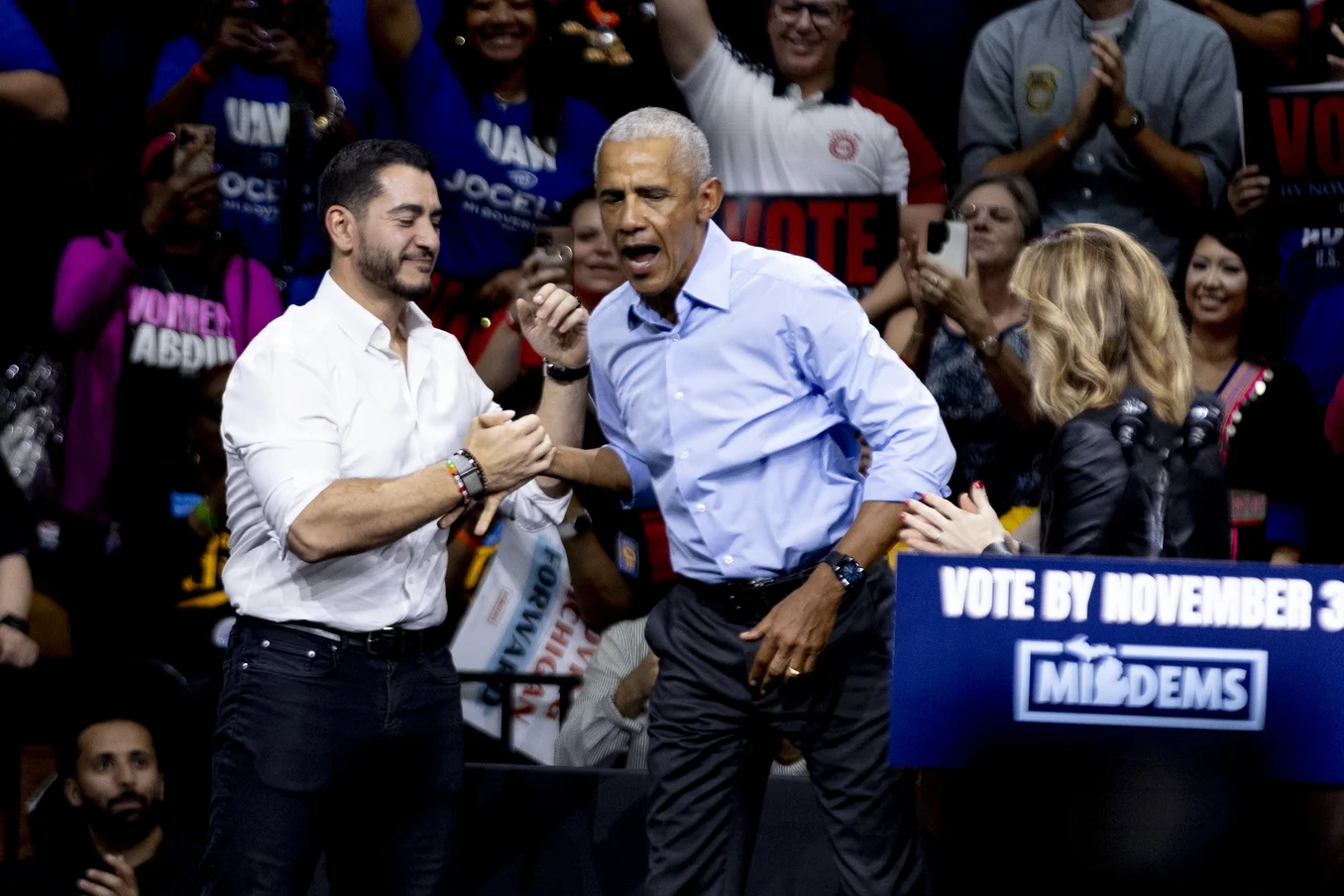
In Michigan, Democratic U.S. Senate candidate Abdul El-Sayed faced attacks questioning his loyalty and associating him with religious extremism.
At an October 25 campaign appearance in Port Huron, Trump described El-Sayed using language associated with jihadism and questioned his suitability for public office.
El-Sayed rejected allegations of extremist ties.
The Associated Press reported that Bishara Bahbah, founder of Arab Americans for Trump, criticized Trump's remarks as unacceptable.
The Michigan controversy is distinct from the Dalton joke.
One involved a generalized remark about a common name.
The other involved accusations directed at an identifiable political candidate.
But the episodes share a broader issue: the role of Muslim identity in American electoral politics.
Candidates should be evaluated through their qualifications, policy positions, public statements, and conduct.
Serious allegations of extremism or unlawful associations require credible evidence.
A candidate's religion does not, by itself, establish those allegations.
Muslim Americans, like members of other religious communities, have the right to participate in political life without being presumed disloyal because of their faith.
That principle applies regardless of the candidate's party or political ideology.
Criticism From Within Trump's Political Coalition
The response to Trump's remarks about El-Sayed also demonstrated that disagreement over religious rhetoric does not follow a simple partisan division.
Arab American voters and organizations have expressed a range of political preferences.
Some supported Trump because of economic policy, foreign affairs, immigration, or dissatisfaction with Democratic leadership.
Others strongly opposed him.
The criticism voiced by Bahbah illustrates how a political supporter can object to a leader's rhetoric without necessarily rejecting every aspect of that leader's agenda.
This distinction is important.
Political movements are not uniform communities.
Their members can disagree about the language, priorities, and actions of the leaders they support.
Religious identity does not determine political affiliation.
And political affiliation does not determine how an individual interprets remarks about religion.
A meaningful public debate should allow room for those differences.
What Does Political Accountability Require?
When a president makes a controversial remark, calls for accountability can take several forms.
Some critics may seek a clarification.
Others may request an apology or a public statement affirming respect for the affected community.
Still others may argue that voters should evaluate the remarks when deciding whether to support the president's political allies.
These are forms of political and civic accountability.
They should be distinguished from criminal or legal sanctions.
The First Amendment protects a broad range of political expression, including speech that many people find offensive.
A controversial joke does not automatically constitute unlawful discrimination.
At the same time, constitutional protection does not prevent journalists, civil rights organizations, voters, or other public officials from criticizing the speaker.
Freedom of expression protects both the original remark and the response to it.
The difficult question is not whether criticism should be permitted.
It is what response would be proportionate and constructive.
An apology may acknowledge that language caused offense.
A clarification may explain what the speaker intended.
A substantive conversation about religious freedom may address broader concerns.
Whether any of those responses is appropriate depends on the circumstances and the judgment of the people involved.
Why Condemnation Alone May Not Resolve the Dispute
Public controversies often follow a familiar pattern.
A political figure makes a provocative statement.
Critics condemn it.
Supporters accuse critics of overreacting.
The controversy dominates public attention briefly before another dispute replaces it.
This cycle can leave the underlying disagreement unresolved.
People who considered the remark offensive may feel their concerns were dismissed.
People who considered it harmless may conclude that public debate has become intolerant of humor.
Neither reaction necessarily produces greater understanding.
A more useful discussion would examine the words themselves, the cultural context, and the standards expected of public officials.
It would also ask whether the controversy reflects a broader issue that can be addressed through policy, civic engagement, or public education.
Condemnation may be warranted in particular circumstances.
But a lasting response to religious prejudice requires more than a single news cycle.
Religious Freedom Is a Shared Constitutional Principle
The United States does not establish citizenship rights according to religious affiliation.
The First Amendment protects the free exercise of religion and prohibits government establishment of religion.
Article VI of the Constitution prohibits religious tests for federal public office.
These protections apply to Muslims, Christians, Jews, Hindus, Buddhists, Sikhs, members of other religious traditions, and people who profess no religion.
They do not require Americans to agree about theology.
They do not prohibit criticism of religious beliefs or institutions.
They establish a constitutional framework in which individuals can hold different beliefs while retaining equal civic rights.
The debate over Trump's remarks should be understood within that framework.
The issue is not whether the government should shield religious communities from every offensive joke.
It is whether political leaders and citizens can exercise freedom of expression while recognizing the equal standing of people whose identities and beliefs differ from their own.
The Responsibility of Muslim Advocacy Organizations
Civil rights organizations also face questions about how they respond to controversial speech.
They must decide which incidents warrant public statements, what evidence supports their concerns, and how to communicate those concerns effectively.
Organizations such as CAIR have an established role in advocating for Muslim Americans.
Their statements can draw attention to experiences that might otherwise receive limited coverage.
But advocacy claims should still be evaluated according to their factual basis.
A disagreement over a joke is not automatically evidence of a civil rights violation.
A claim about discriminatory government conduct requires examination of the relevant policy and its effects.
Clear distinctions help preserve the credibility of public advocacy.
They also make it easier for people outside the affected community to understand the concerns being raised.
Effective advocacy can challenge harmful rhetoric without treating every disagreement as proof of hostility.
The Responsibility of Political Leaders
Political leaders face a corresponding obligation to communicate with care.
They can criticize foreign governments, condemn terrorism, debate immigration, and challenge political opponents without suggesting that entire religious communities share the same characteristics.
They can use humor without assuming that every audience will interpret it as intended.
They can also respond to criticism without treating every objection as an attack on freedom of speech.
The relevant standard should be consistent.
A president who mocks a Christian, Jewish, Muslim, or other religious identity may face criticism from people who believe the remarks were inappropriate.
The legitimacy of that criticism does not depend on which political party occupies the White House.
Respect for religious freedom should not become a principle invoked only when one's preferred community is affected.
Beyond a Single Remark
The Dalton controversy will not be remembered primarily for the statistical accuracy of Trump's claim about the popularity of the name Mohammad.
Its broader significance lies in the public response.
CAIR-Georgia's condemnation reflected concerns about how Muslim identity is portrayed in national politics.
The debate over humor illustrated different understandings of offense, intention, and public responsibility.
The subsequent controversy involving Abdul El-Sayed demonstrated how questions about religious identity can become entangled with electoral competition.
These events do not all involve identical conduct.
They should not be treated as interchangeable.
But together they invite a discussion about the language used by political leaders and the expectations Americans bring to public office.
The issue is not confined to one religion or one political movement.
It concerns the standards by which a religiously diverse democracy conducts its disagreements.
Conclusion: What Happens After the Backlash?
The joke lasted only moments.
The questions it raised are more enduring.
How should a president speak about religious and cultural identities?
When does humor become stereotyping?
What responsibilities do political organizations have when their leaders provoke controversy?
And how should citizens respond without abandoning either freedom of expression or respect for religious difference?
There is no requirement that every American interpret the Dalton remarks in the same way.
Some will regard them as an insignificant joke.
Others will see them as an example of dismissive language toward Muslim communities.
Those disagreements can be examined through the actual words, the context, and the documented responses.
But the larger principle should remain clear.
Religious freedom is not dependent on political popularity.
Equal citizenship does not require a person to abandon a name, faith, or cultural identity.
And political disagreement does not require reducing millions of people to a stereotype.
The responsibility of democratic leadership extends beyond winning an argument or entertaining an audience.
It includes recognizing that words spoken from the presidency can carry meaning far beyond the immediate moment.
The backlash over Trump's Mohammad remarks is therefore not simply a dispute about a joke.
It is an opportunity to examine how a country committed to religious liberty responds when cultural identity becomes part of political spectacle.
A society that values free expression must permit uncomfortable speech.
A society that values equal dignity must also permit that speech to be challenged.
The strength of American democracy depends on preserving both principles.
Reader Comments
Join the conversation. All comments are reviewed by EasyWebSight Staff before publication.
No approved comments yet. Be the first to share your thoughts.
Leave a Comment