By The EasyWebSight Desk
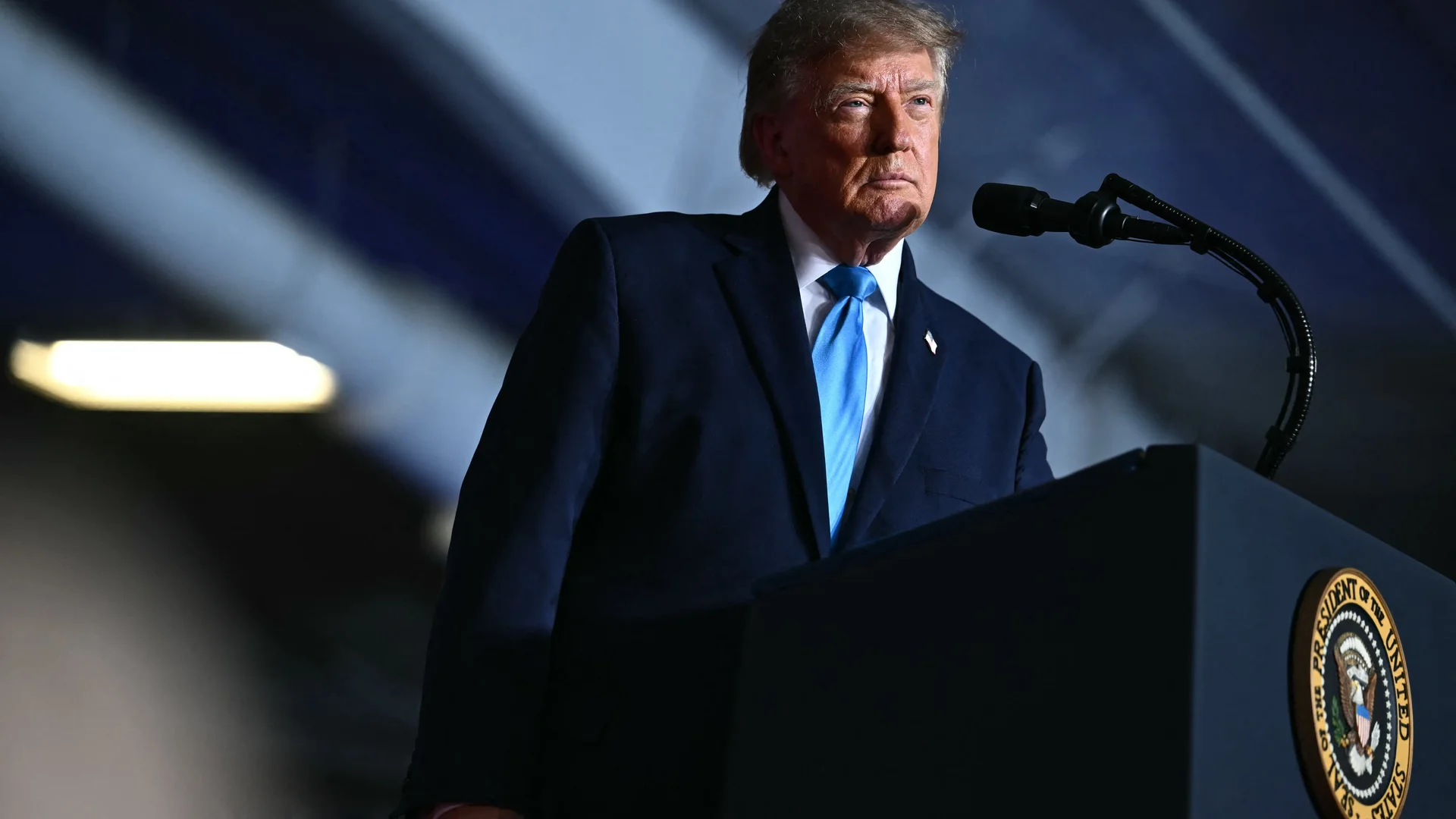
SAN DIEGO, California, October 26, 2026 — President Donald Trump's controversial remarks about the possibility of Iran attacking San Diego have ignited a political dispute that extends beyond traditional partisan divisions, drawing criticism from Democratic officials, a Republican congressional candidate, military-connected communities, and residents of one of America's most strategically important cities.
The controversy began during an October 5 campaign rally in Grand Island, Nebraska, where Trump defended his administration's military confrontation with Iran and argued that rising gasoline prices were a relatively small sacrifice for preventing a nuclear threat.
While discussing the potential consequences of an Iranian nuclear weapon, Trump referred to the possibility of American cities being attacked, specifically naming Los Angeles and San Diego.
His words immediately drew criticism from California leaders, who argued that the president's language appeared to treat American communities as expendable.
The White House rejected that interpretation, insisting Trump was describing the danger his administration was attempting to prevent.
Nevertheless, the exchange raised questions about presidential communication during wartime, the security of American cities, and the importance of San Diego to the nation's military infrastructure.
The Remarks That Sparked the Controversy
Speaking before supporters in Nebraska on October 5, Trump discussed the war with Iran, the economic consequences of the conflict, and his administration's efforts to prevent Tehran from obtaining nuclear weapons.
He characterized higher gasoline prices as a relatively modest cost compared with the potential consequences of a nuclear-armed Iran.
During that discussion, Trump said Iran could potentially destroy an American city and referred specifically to Los Angeles and San Diego.
His phrasing included the words, "Let them take out San Diego."
The remark quickly circulated across social media, where critics interpreted it as suggesting that attacks on American cities might be an acceptable consequence of the administration's foreign policy.
Some members of the audience cheered during the passage, adding to the controversy.
However, the broader context of Trump's speech indicates that he was discussing the dangers of an Iranian attack and the economic costs of preventing such a threat, rather than explicitly advocating the destruction of American cities.
That distinction became central to the ensuing political debate.
Mayor Todd Gloria: San Diego Is Not Collateral Damage
San Diego Mayor Todd Gloria responded forcefully on October 6, rejecting any suggestion that his city could be regarded as expendable.
In an official statement, Gloria emphasized San Diego's contributions to American national security, its military installations, and the people whose lives depend on the city's safety.
He argued that the president's foremost responsibility is protecting every American community, regardless of geography or political affiliation.
Gloria also demanded that Trump retract his remarks and apologize to San Diego residents.
His response reflected a broader concern that national leaders should exercise particular care when discussing threats against American population centers.
For Gloria, the issue was not simply partisan disagreement over the administration's Iran policy.
It was about the lives of nearly 1.4 million San Diego residents, including military personnel, veterans, shipbuilders, scientists, students, and families.
The mayor's statement underscored the city's importance to the country and challenged the notion that any American community should be discussed as an acceptable casualty of international conflict.
A City Central to America's Military Defense
San Diego occupies a distinctive position in the United States' national-security infrastructure.
The city and surrounding region host major Navy and Marine Corps installations, including Naval Base San Diego, Naval Base Point Loma, Naval Air Station North Island, and Marine Corps Air Station Miramar.
These facilities support naval operations, military aviation, logistics, training, and readiness across the Pacific.
San Diego is also home to extensive shipbuilding, maintenance, defense research, and military-support industries.
Its military connections are deeply woven into the local economy and civic identity.
Thousands of service members and their families live throughout San Diego County, attending local schools, operating businesses, and participating in the communities they are assigned to protect.
For these families, discussions of potential attacks on American cities are not merely theoretical.
They concern the security of homes, schools, workplaces, and neighborhoods.
The controversy surrounding Trump's remarks therefore carried particular significance in a region whose residents contribute directly to America's military preparedness.
Republican Jim Desmond Breaks With Trump
Criticism of Trump's remarks was not confined to Democratic officials.
San Diego County Supervisor Jim Desmond, a Republican and Navy veteran running for Congress, publicly rejected the president's comments.
Desmond emphasized that the commander in chief's first obligation is to defend the American people and prevent attacks on the homeland.
While supporting a strong American posture toward Iran, he argued that no American city should be regarded as expendable.
His response demonstrated that the controversy extended beyond conventional partisan divisions.
For Desmond, the question was not whether the United States should confront Iran's military ambitions.
It was whether the president's language adequately reflected the responsibility to protect American communities.
The distinction matters in a region where military service is a defining part of public life and where Republicans and Democrats alike represent substantial military-connected constituencies.
Congressional Leaders Address Public Safety
Representative Sara Jacobs, a Democrat representing part of San Diego County, also addressed the controversy.
At an October 6 news conference, Jacobs said she had spoken with the local FBI field office and military leaders regarding the security situation.
She reported that there was no increased threat to San Diego at that time.
Her statement offered an important distinction between the political controversy surrounding Trump's remarks and the existence of an actual, identified threat to the city.
The president's comments did not, by themselves, establish that Iran was preparing an attack against San Diego.
Local officials nevertheless treated the public reaction seriously, emphasizing the importance of accurate information and responsible communication.
The San Diego Unified School District also expressed concern about how such rhetoric could affect students and military families.
District officials noted that thousands of students in the school system have military connections, making discussions about potential attacks especially sensitive for families already affected by military deployments and international conflict.
The White House Defends Trump's Intended Meaning
As criticism intensified, White House Communications Director Steven Cheung rejected accusations that Trump had encouraged attacks against American cities.
Cheung argued that the president was explaining how American communities could face danger if Iran obtained nuclear weapons.
According to the administration, Trump's remarks were intended to justify military action against Iran and the associated economic costs.
The White House maintained that preventing a nuclear-armed Iran was essential to protecting American cities.
Independent fact-checking organizations subsequently examined the president's full remarks.
FactCheck.org concluded that, although Trump's wording was confusing, the surrounding context supported the interpretation that he was describing the danger of an Iranian nuclear attack rather than advocating one.
PolitiFact similarly highlighted the broader discussion of gasoline prices, the war, and the administration's stated goal of preventing Iran from acquiring nuclear weapons.
The distinction does not eliminate legitimate criticism of the president's phrasing, but it is essential to an accurate account of what he said.
Trump Clarifies That American Cities Must Be Protected
On October 7, Trump returned to the subject during remarks in Texas.
This time, he explicitly stated that his administration would not allow Iran to attack San Diego or Los Angeles.
The clarification reinforced the White House's position that the original comments were intended as a warning about the consequences of Iranian nuclear capabilities.
It also highlighted how quickly an ambiguous presidential statement can become a national controversy, particularly during an ongoing military confrontation.
Presidential language carries unusual weight because it can influence public confidence, diplomatic perceptions, and the interpretation of American security commitments.
Even when a statement is not intended as a threat or endorsement of violence, unclear wording can produce confusion and anxiety.
Beyond Partisan Politics: The Responsibility to Reassure
The San Diego controversy illustrates the difficult balance between discussing national-security threats and reassuring the communities potentially affected by them.
Political leaders routinely describe hypothetical dangers to explain military decisions, defense spending, and foreign-policy priorities.
Yet those discussions become especially sensitive when specific American cities are named.
San Diego's importance as a military center makes it a plausible subject in discussions about national defense.
That same importance also means that careless or ambiguous language can resonate deeply among residents who understand the sacrifices associated with military service.
The bipartisan criticism from Gloria and Desmond demonstrates that concern about protecting American communities does not belong exclusively to one political party.
Their objections arose from different political perspectives but converged on a common principle: the federal government's responsibility to safeguard American lives.
A City That Serves America Expects Protection in Return
San Diego's relationship with the United States military is both strategic and personal.
Its naval bases, military installations, defense industries, and service families contribute to the nation's security every day.
The city's residents understand that international conflicts carry risks, and many have experienced the human consequences of military service firsthand.
The controversy over Trump's remarks did not establish an imminent Iranian attack against San Diego, nor did the full context demonstrate that the president intended to invite one.
It did, however, expose the consequences of presidential language that can be interpreted in dramatically different ways.
For San Diego, the central issue remains straightforward.
A city that helps defend the United States expects its government to defend it in return.
And whether the discussion concerns Iran, nuclear weapons, military readiness, or the costs of war, the safety of American communities should remain an unmistakable national priority.
Reader Comments
Join the conversation. All comments are reviewed by EasyWebSight Staff before publication.
No approved comments yet. Be the first to share your thoughts.
Leave a Comment