By The EasyWebSight Desk
WASHINGTON, October 28, 2026 — Former President Barack Obama has found an unexpectedly effective way to get under Donald Trump's skin: a joke about the White House looking like Saddam Hussein opened a Cheesecake Factory. What began as a humorous criticism of Trump's lavish renovations has escalated into an extraordinary political exchange involving the president, the Treasury secretary, the White House communications operation, and a restaurant chain that never asked to become part of America's latest partisan confrontation. Now Obama has delivered another pointed response, suggesting that Trump's outrage over interior decorating reveals something far more troubling about the administration's priorities.
The Joke That Started It All
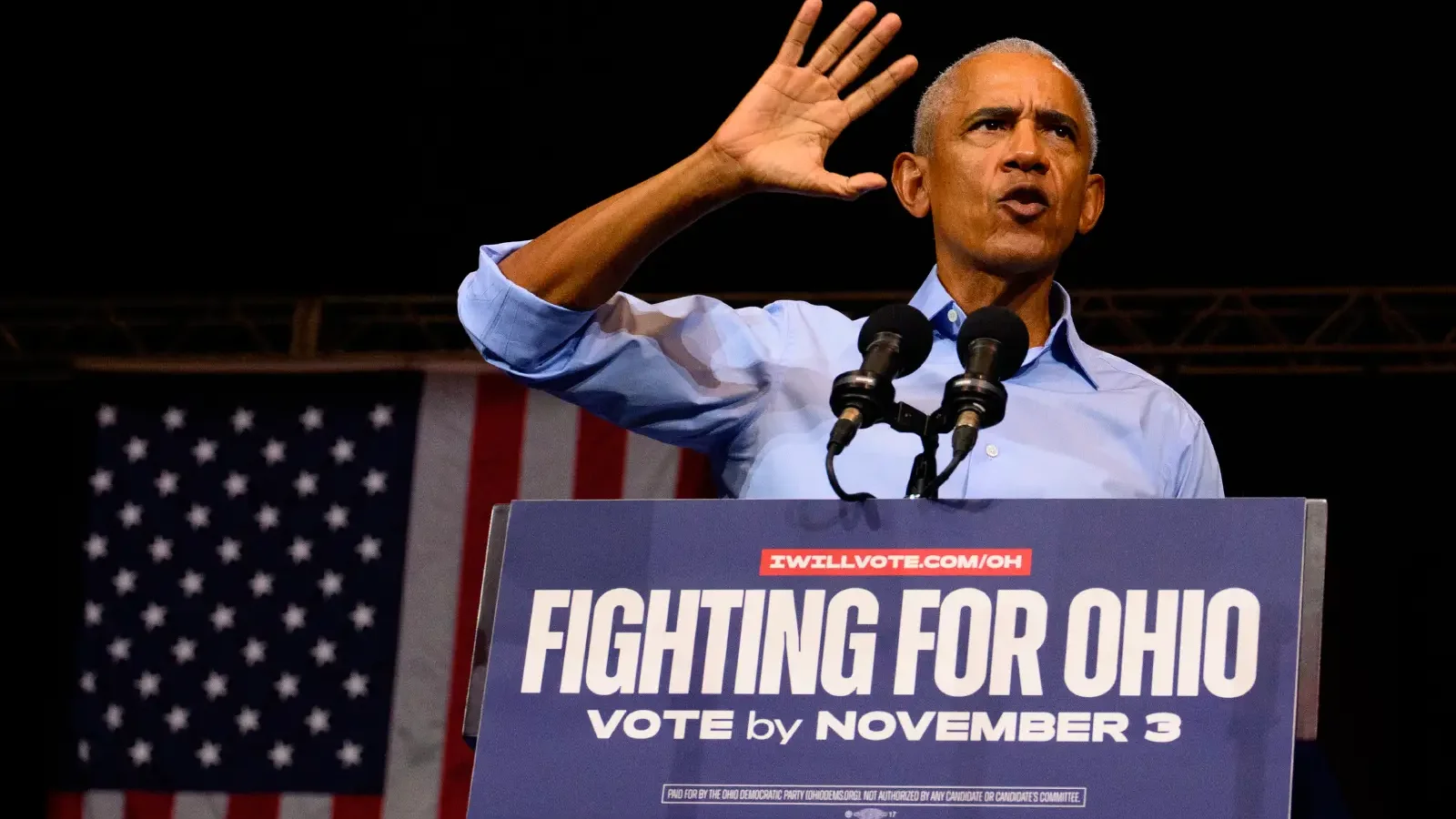
The controversy began Saturday, October 24, when Obama appeared at a Democratic campaign rally in Ohio, supporting former Senator Sherrod Brown and gubernatorial candidate Amy Acton ahead of the November 3 midterm elections.
During his remarks, Obama criticized Trump's extensive renovations of the White House, including plans for a massive ballroom, changes to the Rose Garden, a new helicopter landing area, and the president's conspicuous enthusiasm for gold decorations.
Obama suggested that Trump seemed more interested in home improvement than addressing the country's economic problems.
He joked that the president might be better suited to hosting a television program on HGTV.
Then came the remark that would dominate political conversations for days:
“He's got the White House looking like Saddam Hussein opened a Cheesecake Factory.”
The audience erupted in laughter.
The comparison was deliberately exaggerated. Saddam Hussein, Iraq's former dictator, was notorious for his extravagant palaces, while the Cheesecake Factory is famous for its elaborate interiors, oversized menus, and decorative excess.
Obama's joke combined those images to ridicule what he portrayed as Trump's preference for ostentatious displays of wealth.
But beneath the humor was a serious political argument.
While Americans were struggling with rising living expenses, Obama suggested, the president appeared preoccupied with gold ornaments, architectural renovations, and the appearance of his presidential residence.
The joke was memorable because it compressed that criticism into a single absurd image.
And Trump was not amused.
Trump Fires Back: Obama Doesn't Understand the White House
By Monday, October 26, Trump was publicly defending his renovations and criticizing his predecessor.
Speaking to reporters before traveling to Mississippi, the president insisted that the White House had required substantial repairs and improvements.
He argued that the building had deteriorated and that his administration had employed highly skilled craftsmen to restore its appearance.
Trump also suggested that Obama lacked the appreciation necessary to recognize the improvements.
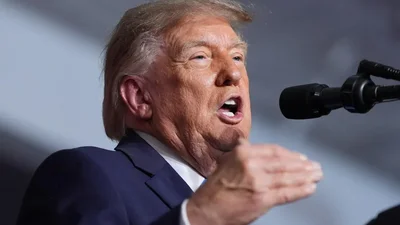
“That just shows why you were a lousy president,” Trump said in response to the Cheesecake Factory comparison.
Later that evening, during a campaign rally in Corinth, Mississippi, Trump returned to the subject.
Rather than ignoring Obama's joke, he attempted to transform it into an argument about business success.
Trump praised the Cheesecake Factory as a successful company and suggested that Obama's criticism reflected hostility toward successful businesses.
The response appeared to miss the central point of Obama's original remark.
Obama had not been criticizing the restaurant's profitability, food, or customers.
He had been mocking Trump's decorative preferences and questioning whether White House renovations deserved so much presidential attention.
Nevertheless, the restaurant became the centerpiece of an increasingly unusual political argument.
The Treasury Secretary Joins the Cheesecake Factory Battle
The dispute soon expanded beyond the two presidents.
Treasury Secretary Scott Bessent visited a Cheesecake Factory restaurant in Washington, D.C., on Monday, publicly defending the establishment and criticizing Obama.
Bessent said he enjoyed eating at the restaurant and suggested that Obama and his associates should become more familiar with an establishment popular among ordinary Americans.
He also took a swipe at the Obama Presidential Center in Chicago, comparing its architecture to Darth Vader's tomb.
The response reflected a broader Republican argument that Obama's joke was elitist and insulting toward Americans who enjoy dining at the Cheesecake Factory.
Conservative commentators accused the former president of looking down on a popular restaurant chain.
But that interpretation was disputed.
The original joke concerned the White House's decorative style, not the social standing of the restaurant's customers.
The White House itself joined the controversy, publishing a mock Cheesecake Factory menu that promoted Trump administration policies.
What had begun as one campaign joke was now consuming the attention of senior administration officials.
And Obama was preparing another response.
Obama's October 28 Comeback: The Joke Wasn't the Real Problem
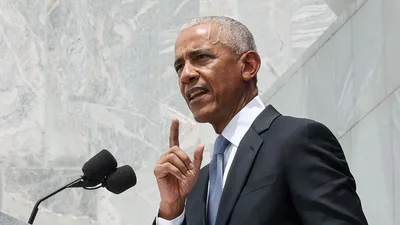
Speaking at a Democratic campaign rally in Atlanta, Georgia, on October 28, Obama returned to the controversy.
This time, he addressed Trump's reaction directly.
Obama explained that he had spent plenty of time at the Cheesecake Factory while raising his two daughters.
He recalled frequent family outings to casual restaurants, including Chuck E. Cheese and California Pizza Kitchen.
The response undercut the suggestion that he regarded the Cheesecake Factory as beneath him.
But Obama quickly redirected the conversation toward the economy.
He argued that the real concern was not whether families enjoyed eating at the restaurant, but whether they could still afford to do so.
With restaurant prices and other household expenses putting pressure on Americans, Obama suggested that the administration should be focusing on affordability rather than defending the president's decorating choices.
Then he delivered the central criticism of his latest speech.
Obama observed that the Trump administration had reacted vigorously to his Cheesecake Factory joke while, in his assessment, failing to adequately answer his accusations concerning inflation, rising costs, and government ethics.
He mocked the idea that senior officials had devoted so much energy to a dispute about a restaurant comparison.
In Obama's telling, the Treasury secretary—whose responsibilities include helping manage the nation's economic policy—had become part of an organized response to a joke about White House decorations.
The former president characterized the spectacle as evidence that the administration was not treating the country's problems with sufficient seriousness.
The comeback transformed the controversy.
What initially appeared to be an exchange of insults about interior design had become an argument about presidential priorities.
The Saddam Hussein Comparison: Why It Stung
Obama's reference to Saddam Hussein added another layer to the controversy.
The former Iraqi dictator cultivated an image of personal grandeur through elaborate palaces, monumental architecture, and extravagant interiors.
By invoking Hussein, Obama connected Trump's decorating preferences to a familiar symbol of authoritarian excess.
The comparison was rhetorical satire, not a factual assertion that Trump's administration was equivalent to Hussein's dictatorship.
Its effectiveness depended on the absurdity of imagining the former Iraqi leader operating an American restaurant chain inside the White House.
It also struck at an aspect of Trump's public identity that has long been central to his political and business career.
Trump has repeatedly emphasized wealth, luxury, architectural grandeur, and the visual symbols of success.
Gold-colored decorations, ornate interiors, and monumental construction projects have been recurring elements of that aesthetic.
Obama turned those characteristics into a source of ridicule.
Rather than presenting Trump's renovations as evidence of presidential prestige, he portrayed them as excessive, theatrical, and disconnected from the everyday concerns of voters.
For Trump, who frequently uses mockery against political opponents, becoming the subject of a particularly memorable joke from Obama created an uncomfortable reversal.
The Hussein Irony: When a Name Comes Back to Haunt Trump
There is another layer of irony in Barack Obama's comparison of Donald Trump's White House to something Saddam Hussein might have designed.
For years, Trump has conspicuously emphasized Obama's middle name, repeatedly referring to the former president as Barack "Hussein" Obama, often with a pointed emphasis on "Hussein."
The name itself is neither unusual nor controversial. It is part of Obama's legal name, inherited through his family. But in the context of Trump's long history of questioning Obama's birthplace and American identity, critics have interpreted the repeated emphasis as an attempt to associate the former president with foreignness, Islam, and the Middle East.
The tactic became especially recognizable during Trump's promotion of the false birther conspiracy, which questioned whether Obama was born in the United States despite clear evidence of his Hawaiian birth.
Now comes an extraordinary reversal.
Obama has invoked Saddam Hussein—not as a reference to his own middle name, but as a symbol of the extravagant palaces and authoritarian grandeur associated with the former Iraqi dictator.
And the target of the comparison is Donald Trump himself.
For a president who has repeatedly used the name "Hussein" when attacking Obama, finding himself compared to Saddam Hussein's taste in architecture carries a particularly sharp political irony.
There is no evidence that Obama deliberately constructed the joke as revenge for Trump's longstanding emphasis on his middle name. Nevertheless, the historical connection gives the exchange an additional dimension.
For years, Trump used Obama's name as a political weapon.
Now Obama has used the name of a notorious dictator as part of a joke about Trump's decorative excess—and the president has responded with unmistakable irritation.
The irony is difficult to miss: Trump spent years emphasizing the "Hussein" in Barack Obama's name. Now it is Obama's reference to Saddam Hussein that has put Trump on the defensive.
The Political History Behind the Rivalry
The latest confrontation is part of a political rivalry stretching back more than fifteen years.
Before entering the White House, Trump became one of the most prominent promoters of the false conspiracy theory questioning whether Barack Obama had been born in the United States.
The claims persisted despite clear evidence that Obama was born in Hawaii.
In April 2011, Obama publicly released his long-form birth certificate in an effort to end the controversy.
Days later, at the White House Correspondents' Dinner, Obama mocked Trump while the future president sat in the audience.
The moment became one of the most widely remembered episodes in their political relationship.
Over the years, the two men have continued criticizing each other's leadership, policies, and political legacies.
Trump has repeatedly attacked Obama's presidency, while Obama has portrayed Trump's political approach as divisive, undisciplined, and incompatible with the responsibilities of democratic leadership.
Their disagreements are substantive, involving immigration, healthcare, economic policy, international alliances, and the role of government.
But their confrontations have also become deeply personal.
The Cheesecake Factory exchange demonstrates how even a seemingly minor joke can revive that longstanding antagonism.
It would be speculative to describe Obama's remarks as a carefully planned act of personal revenge.
What can be established is that Obama delivered a joke, Trump responded publicly, and Obama then used that response to reinforce his broader political criticism.
A Restaurant Chain Caught in the Political Crossfire
The Cheesecake Factory itself became an unintended participant in the controversy.
The restaurant chain, founded in Beverly Hills in 1978, has built a successful business around an extensive menu, generous portions, and distinctive interiors.
Its decorative style has frequently attracted attention because of its unusual combination of architectural influences and elaborate ornamentation.
But the political dispute coincided with significant business news.
On October 27, the company reported record third-quarter revenue of approximately $1.03 billion, a 14 percent increase from the comparable period a year earlier.
Comparable restaurant sales also increased substantially.
The financial results provided an ironic contrast to the political argument.
While politicians debated whether the restaurant's decor represented luxury, excess, or ordinary American dining, the company was reporting strong operating performance.
There is no established evidence that Obama's joke caused those quarterly results, which largely reflected business activity before the controversy.
The restaurant's commercial success also does not settle the political question of whether its interior design is an appropriate model for the White House.
Those are two entirely different matters.
The Real Argument: Gold Decorations or Grocery Bills?
The most consequential element of Obama's latest remarks was his effort to redirect attention from presidential decorating preferences toward household finances.
The White House is both the president's residence and a national institution.
Its preservation, maintenance, and modernization are legitimate government responsibilities.
Presidents from both political parties have undertaken renovations, restoration projects, and improvements to the historic property.
Trump and his supporters argue that his changes reflect a commitment to maintaining the building's beauty and prestige.
Critics question the scale, cost, symbolism, and priorities associated with some of the projects.
Those disagreements deserve examination on their merits.
But Obama introduced a more politically sensitive question.
If the president can devote considerable attention to the appearance of the White House, how effectively is his administration addressing the financial pressures facing American households?
That question resonates particularly strongly during a midterm election campaign.
Voters are being asked to judge the administration's economic performance, its policy decisions, and the direction of the country.
The affordability of housing, groceries, healthcare, and transportation carries far greater practical consequences for most Americans than the decorative choices inside the Oval Office.
Obama's criticism was that the administration appeared more eager to defend its taste in interior design than to engage with those concerns.
That is a political argument, not proof that White House renovations have displaced economic policymaking.
Nevertheless, the administration's unusually visible response gave Obama an opportunity to make the argument more forcefully.
A Joke That Became a Political Weapon
Political humor works best when it reveals a contradiction that audiences immediately recognize.
Obama's Cheesecake Factory comparison succeeded in attracting attention because it combined familiar cultural imagery with a criticism of Trump's public persona.
Trump's response then extended the life of the joke.
Rather than allowing the remark to disappear after a single news cycle, the president discussed it with reporters and supporters.
Senior administration officials joined the exchange.
The White House promoted its own response.
And Obama returned to the subject with a second round of criticism.
Each reaction generated additional attention for the original joke.
The episode illustrates a recurring challenge for politicians confronted with ridicule.
Respond too aggressively, and the joke becomes more prominent.
Ignore it, and opponents may claim that the criticism landed.
Trump chose confrontation.
Obama used that confrontation to portray the administration as distracted by trivial controversies.
Whether voters ultimately regard the exchange as meaningful political criticism or merely another episode of campaign-season theater remains to be seen.
But the argument has already become one of the more unusual stories of the closing days of the 2026 midterm campaign.
The Bottom Line
Barack Obama did not need an elaborate political strategy to provoke Donald Trump.
He needed one comparison involving Saddam Hussein, an American restaurant chain, and a White House increasingly decorated in gold.
Trump's response transformed the joke into a national political controversy.
The Treasury secretary joined the argument.
The White House produced its own Cheesecake Factory-themed messaging.
And Obama returned to the campaign trail with a fresh opportunity to criticize the administration's priorities.
The former president's latest remarks were not simply about whether the White House resembles a restaurant.
They were about the contrast between presidential image-making and the economic concerns of ordinary Americans.
Trump insists that his renovations reflect pride in the nation's most recognizable residence.
Obama argues that the president's attention would be better directed toward the rising cost of living.
Both men are using the dispute to communicate broader political messages ahead of Election Day.
But the central irony remains difficult to ignore.
A joke intended to ridicule the president's obsession with appearances produced an extended argument about those very appearances.
And while the political establishment debated gold decorations and restaurant interiors, millions of Americans continued confronting the financial realities of everyday life.
Obama's most effective punchline may not have been the Cheesecake Factory comparison itself. It may have been demonstrating how much political attention the administration was willing to devote to answering it.
In the end, the question facing voters is not whether the White House looks like a palace, a luxury hotel, or an unusually elaborate restaurant.
It is whether the people living and working inside it are paying enough attention to the Americans who cannot afford any of those things.
Reader Comments
Join the conversation. All comments are reviewed by EasyWebSight Staff before publication.
No approved comments yet. Be the first to share your thoughts.
Leave a Comment