By The EasyWebSight Desk
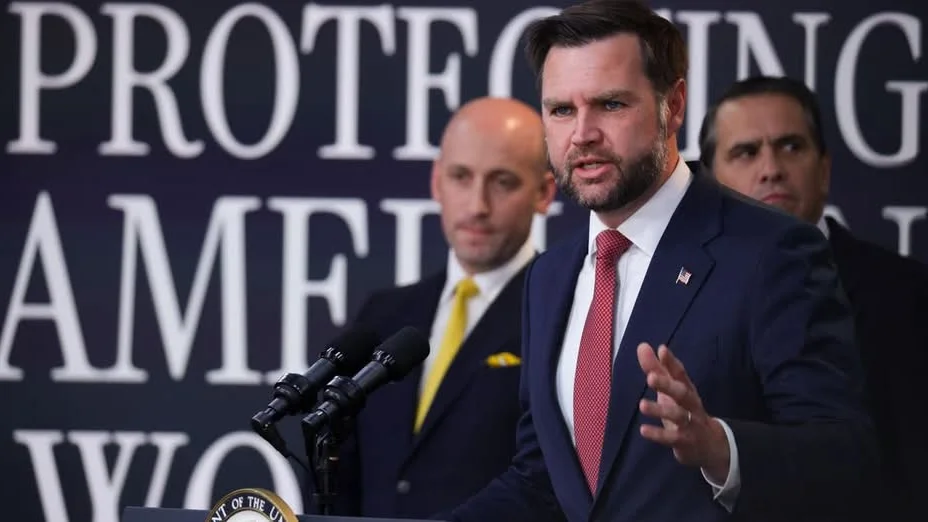
WASHINGTON — Vice President J.D. Vance on Thursday delivered a forceful warning to corporations operating in the United States, declaring that companies "cannot lay off American workers and then replace them with foreign indentured servants" as the Trump administration announced new restrictions targeting several major technology firms.
The remarks came during a White House press conference in which the administration announced the suspension of several companies from participating in the Permanent Labor Certification (PERM) program, a key pathway used by employers to sponsor foreign workers for permanent residency in the United States. Companies affected include Microsoft, Adobe, and major information technology firms such as Infosys, Tata Consultancy Services, Wipro, HCL, Cognizant, and Capgemini.
Singling out Microsoft, Vance accused the company of benefiting from foreign worker programs while reducing its American workforce. He argued that businesses receiving the advantages of operating in the United States should prioritize hiring and training American workers. According to Vance, Microsoft laid off approximately 6,000 American employees while also applying for thousands of H-1B visas and green cards for foreign workers.
"We want people to invest in the United States of America," Vance said, adding that companies should continue growing while employing more Americans. He then delivered the line that quickly became the focus of national debate: "You cannot lay off American workers and then replace them with foreign indentured servants."
The comments reignited longstanding arguments over the H-1B visa program, which allows U.S. companies to hire highly skilled foreign professionals in specialized fields. Critics of the program, including many within the Trump administration, argue that it can be used to lower labor costs and displace American workers. Supporters contend that it helps American companies attract global talent and fill positions that are difficult to staff domestically.
The statement also provoked an international response. India's Ministry of External Affairs criticized Vance's language as "deeply offensive," arguing that the terminology carried historical and colonial connotations and failed to recognize the contributions of Indian professionals to the U.S. economy and technology sector. The ministry stressed that Indian workers in the United States are highly skilled and play an important role in innovation and growth.
The controversy underscores the growing political focus on employment-based immigration programs as the administration pursues a broader effort to tighten oversight of foreign worker visas. With technology companies increasingly reliant on international talent, the dispute is likely to remain a prominent issue in debates over immigration, labor markets, and the future of the American technology industry.