By The EasyWebSight Desk
Bottom line
Viktor Orbán had his worst electoral performance in over a decade—and lost power outright in Hungary’s 2026 election.
The actual results
- Orbán’s party (Fidesz)
- ~38–39% of the vote
- 52 seats in parliament
- Opposition (Tisza Party, led by Péter Magyar)
- ~53% of the vote
- 141 seats (two-thirds supermajority)
Note: That’s not just a loss—it’s a landslide defeat.
Why this is such a big deal
1. End of a 16-year rule
- Orbán had been in power continuously since 2010
- He won four straight elections with large majorities before this
- This election ended one of Europe’s longest-running governments
2. Massive turnout—and rejection
- Turnout was about 80% (historically high)
- High participation suggests:
- Strong public engagement
- A broad desire for change
3. A collapse in dominance
- His party’s seat count was more than cut in half
- He went from:
- Controlling a supermajority
- to becoming the opposition
4. He conceded quickly
- Orbán acknowledged defeat the same night
- Ending speculation he might contest results
Why he lost (key factors)
Analysts point to a mix of structural and political reasons:
Economic frustration
- Inflation and stagnation hurt public support
- Cost-of-living issues became central in the campaign
Corruption concerns
- The opposition centered its message on:
- Elite wealth
- Government favoritism
- That message resonated widely
EU tensions
- Orbán’s clashes with the European Union (over rule of law, funding, etc.) became a liability
- Voters signaled interest in resetting relations
A credible challenger
- Péter Magyar was:
- A former insider
- Able to unify opposition voters
- His party built momentum for months before the vote
Aftermath
- Orbán plans to stay politically active and lead his party
- Hungary is entering a major political transition
- The new government is already moving to:
- Restore EU ties
- Reform institutions
Big picture
Orbán didn’t just lose an election—he lost the system of dominance he built over 16 years.
- Before: dominant, “illiberal democracy” model
- Now: opposition leader facing a government with constitutional-level power
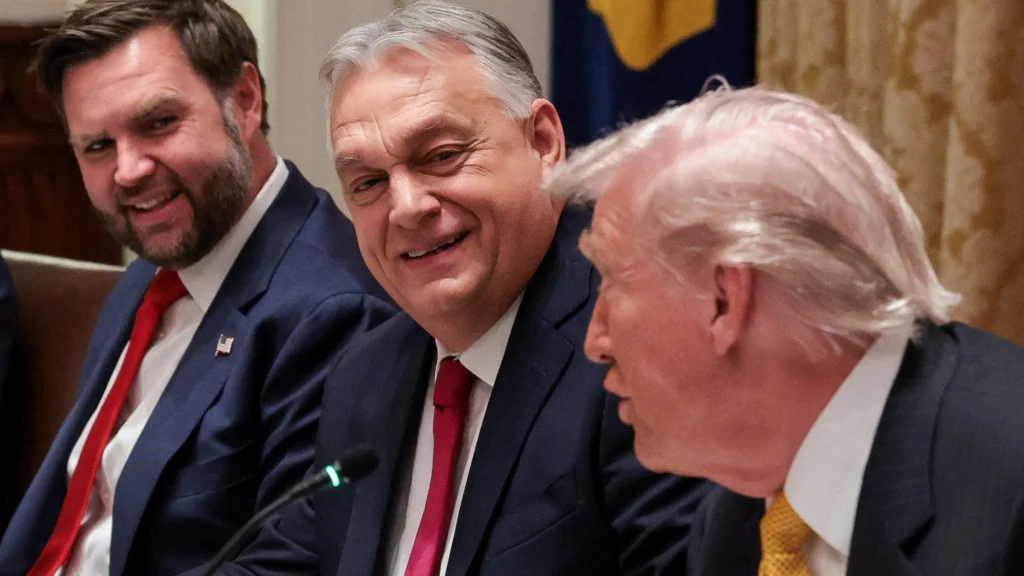
The Donald Trump administration did openly support Viktor Orbán during Hungary’s 2026 election
What the Trump administration actually did
1. High-level political endorsement
- Trump repeatedly praised Orbán as a leader, calling him strong and effective
- The two had a long-standing political alliance, with Orbán aligned ideologically with Trump-style populism
Note: This is explicit political backing
2. Vice President JD Vance’s visit (most significant move)
- JD Vance traveled to Budapest just days before the election
- He:
- Appeared alongside Orbán
- Praised his leadership
- Encouraged voters to support him in speeches
Some reporting described this as:
- An “open endorsement” of Orbán’s campaign
- A rare case of a U.S. official effectively campaigning abroad for a foreign leader
3. Broader diplomatic alignment
- The administration framed Hungary as:
- A model for conservative governance in Europe
- U.S.–Hungary relations were described as entering a “golden age” by officials
Was this “interference”?
That depends on how you define the term:
Not interference (strict definition)
- No evidence the U.S.:
- Tampered with votes
- Hacked systems
- Manipulated election infrastructure
But clearly political influence
- Sending a vice president to:
- Praise one candidate
- Appear at campaign-style events
- That’s unusually direct involvement compared to typical diplomacy
Analysts often describe this as:
“overt political support” or “endorsement”, not covert interference
Did it work?
No—despite strong backing:
- Orbán lost in a landslide
- Some analysts say the result shows limits of U.S. influence abroad
Bottom line
- The Trump administration clearly supported Orbán politically
- The most notable action was JD Vance’s pre-election visit and public endorsement
- But:
- It did not involve election manipulation
- And it did not change the outcome