By The EasyWebSight Desk
The Enduring Mystery of the Bird Girl Statue
Few sculptures in the United States have achieved the unlikely cultural fame of the Bird Girl, a 50‑inch bronze figure created in 1936 by American artist Sylvia Shaw Judson. Originally intended as a simple garden ornament, the statue’s serene posture and contemplative expression would one day become synonymous with Savannah’s Southern Gothic allure — but only after spending decades in quiet obscurity.
Origins: A Garden Sculpture With a Gentle Purpose
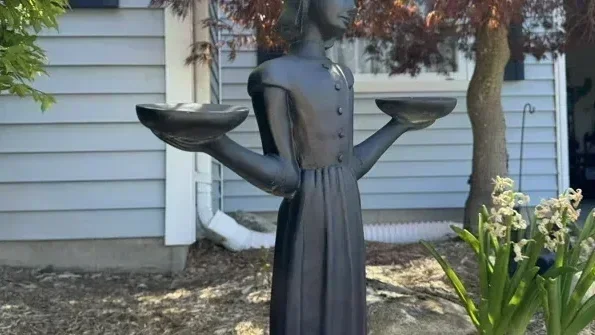
Judson sculpted Bird Girl at her family’s summer home, Ragdale, in Lake Forest, Illinois. The model was eight‑year‑old Lorraine Greenman, whose slight frame and gentle demeanor inspired the statue’s distinctive pose: a young girl standing straight, head tilted softly to the left, holding two shallow bowls at her sides.
Despite later interpretations, the bowls were never meant to symbolize the weighing of good and evil. They were designed simply to hold food or water for birds — a quiet gesture of care that reflects Judson’s interest in harmony between people and nature.
The Journey to Savannah
Judson cast only four original bronzes. One of them was purchased by Lucy Boyd Trosdal of Savannah, who placed the statue — nicknamed Little Wendy — at her family’s plot in Bonaventure Cemetery. There it stood for more than fifty years, largely unnoticed except by occasional visitors wandering the cemetery’s moss‑draped paths.
The pedestal beneath the statue bore a biblical inscription from II Corinthians 5:8: “We are confident, I say, and willing rather to be absent from the body, and to be present with the Lord.” A fitting epitaph for a sculpture that radiates quiet stillness.
A Photograph That Changed Everything
In 1993, photographer Jack Leigh was commissioned to shoot the cover image for John Berendt’s upcoming book Midnight in the Garden of Good and Evil. Berendt suggested Bonaventure Cemetery as a location, and Leigh spent two days searching for the perfect subject. Near dusk on the second day, he found Bird Girl.
Leigh captured the statue in fading light, later spending hours in the darkroom to create the moonlit, ethereal effect that would define the book’s cover. When the book was released in 1994, it became a national bestseller — selling more than 5 million copies — and Bird Girl became instantly iconic.
Crowds began flocking to Bonaventure Cemetery, prompting concerns about damage to the statue. In 1997, the Trosdal family relocated Bird Girl to the Telfair Academy, where she remains on display today.
Cultural Legacy and Replicas
Bird Girl’s fame sparked demand for replicas, but Judson’s daughter Alice Ryerson Hayes tightly controlled reproduction rights, even destroying molds to prevent unauthorized copies. Authorized versions — including bronze and epoxy reproductions — help support the Ragdale Foundation, the artist’s historic estate and artists’ retreat.
Today, Bird Girl symbolizes more than a single artwork. She represents:
- Savannah’s atmospheric charm
- The power of photography to transform meaning
- The unexpected journey from private art to public icon
Her quiet posture, once meant only to welcome birds, now welcomes millions of admirers who find in her expression a blend of innocence, melancholy, and timeless mystery.