By The EasyWebSight Desk
The White House Correspondents' Dinner is usually the opposite of what happened last night—it’s meant to be a lighthearted, almost theatrical night of politics, media, and comedy.
Here’s what it normally looks like:
The tone: politics meets comedy
- It’s often called “Nerd Prom” in Washington, D.C.
- The vibe is:
- Formal (black tie, gowns)
- But also satirical and self-deprecating
- Politicians, journalists, and celebrities all mix together in a way you rarely see anywhere else
The two main speeches
1. The President’s speech
- The sitting president (this year, Donald Trump) usually:
- Roasts the press
- Jokes about political rivals
- Makes fun of themselves (sometimes more than others…)
Note: Think sharp one-liners, not policy speeches.
2. The comedian host
- A major comedian is invited to headline
- Their job:
- Roast everyone—media, politicians, the president
- Push boundaries (sometimes controversially)
Famous past hosts include:
- Stephen Colbert (famously brutal in 2006)
- Michelle Wolf (very controversial 2018 set)
- Trevor Noah (more recent, lighter tone)
Journalism awards & purpose
At its core, it’s not just a party:
- The White House Correspondents' Association hosts it to:
- Honor journalism
- Award scholarships
- Support press freedom
So there’s a serious backbone underneath the jokes.
The experience
- Held at a large hotel ballroom (usually the Washington Hilton)
- Thousands of attendees:
- Reporters
- Politicians
- Hollywood celebrities
- Multi-course dinner, drinks, networking—then speeches and entertainment
Media spectacle
- Broadcast live or widely covered
- Clips go viral the next day (especially brutal jokes)
The real contrast
What it should have been:
- A mix of comedy, politics, and media celebration
What it turned into:
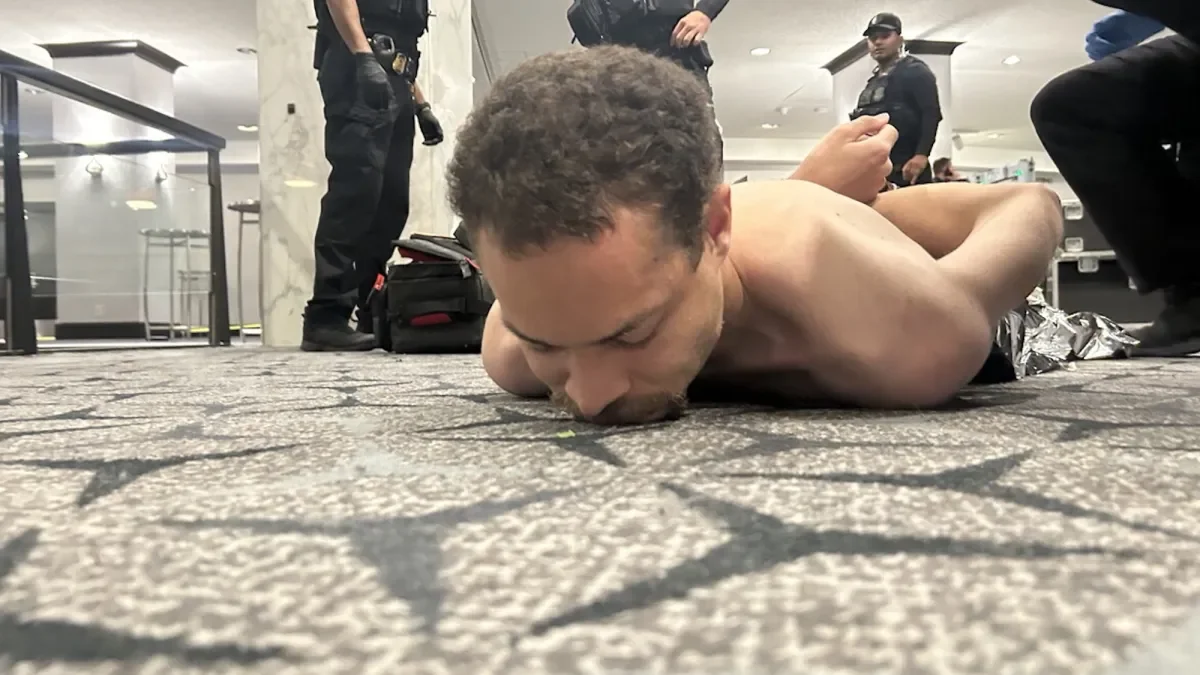
- A security crisis and evacuation, cutting off everything—no speeches, no comedy, no awards moment.
- A political event and rally hosted by Trump as a News Conference held at the White House after the shooting, in which he compared himself to Abraham Lincoln, stating that "only the most impactful people, the people that do the most, take a look at Abraham Lincoln, are the target of assassination".
- A ballroom promotional event to justify the construction of his (Donald Trump's) new ballroom on the White House at the taxpayers expense.
- A combative interview with CBS's 60 minutes Norah O'Donnell in which the president went back to his hackneyed sound bites comparing himself to Abraham Lincoln, and he (the president) went back to his assault on the free press, demeaning Norah O'Donnell by calling her a disgrace, when she confronted him with the shooter stated reasons for his actions as written on his (the shooter) manifesto.
- A shooter manifesto stating: "I am no longer willing to permit a pedophile, rapist, and traitor to coat my hands with his crimes".
Why did Donald Trump decide to attend the White House Correspondents' Dinner this year?
Short answer: it was unusual—and likely intentional.
Why his attendance stood out
During his first presidency (2017–2021), Trump consistently skipped the dinner.
- He often criticized the press and the event itself
- Instead, he held campaign-style rallies on the same night
So showing up this time signals a shift in approach, at least tactically.
Likely reasons he attended
1. Image reset (or recalibration)
Attending an event hosted by the White House Correspondents' Association can:
- Project confidence
- Show willingness to engage—even with critical media
- Soften tone publicly without changing core positions
2. Control the narrative
Being in the room gives a president:
- A chance to deliver their own message directly
- An opportunity to frame media relationships on their terms
- A highly visible stage where clips can go viral
3. Political optics
The dinner is one of the most high-profile annual events in Washington, D.C.:
- Attendance signals normalcy and authority
- Skipping it repeatedly can look like avoidance
- Showing up can be framed as “presidential” or confident
4. Second-term difference
If this is part of a second presidency:
- Leaders often adjust strategy after experience
- There may be less incentive to boycott symbolic events
- Or more interest in legacy and tone-setting
Bottom line
He didn’t attend in the past because it conflicted with his stance toward the media.
Attending now likely reflects a strategic decision—not a personality change:
- Engage when it’s advantageous
- Use the spotlight
- Shape perception
White House Correspondents’ Dinner (April 25, 2026) and the First Ammendment
The connection between the White House Correspondents' Dinner and the First Amendment to the United States Constitution is actually central to what the dinner represents—and why last night’s events hit so hard.
What the dinner stands for
The dinner is hosted by the White House Correspondents' Association, whose entire mission is to:
- Protect independent journalism
- Ensure reporters have access to the president
- Defend press freedom
So the event is basically a public celebration of:
- The right to question power
- The role of a free press in a democracy
- Defend press freedom
Where the First Amendment comes in
The First Amendment guarantees:
- Freedom of speech
- Freedom of the press
- The right to assemble
At its core, it allows journalists to:
- Criticize the president without punishment
- Investigate government actions
- Report freely to the public
The dinner symbolically reinforces all of that—with the president sitting in the room being joked about and criticized.
Why the tone matters
The roasting and satire aren’t just entertainment—they’re a demonstration of First Amendment culture:
- A comedian can mock the president publicly
- Journalists can challenge power openly
- The president is expected to tolerate (even laugh at) criticism
That’s something you don’t see in many countries.
Why the 2026 incident is significant
Because of that symbolism, the disruption of the 2026 dinner carries extra weight:
- An event celebrating free expression and press freedom
was interrupted by violence and fear
Even though the First Amendment protects against government suppression, not random violence, the impact is still real:
- It can create a chilling effect
- It raises concerns about safety for journalists and public discourse
- It highlights tensions around political rhetoric and security
Important distinction
It’s worth being precise:
- The First Amendment protects against government actions restricting speech
- It does not guarantee:
- Safety from private violence
- A disruption-free environment
So legally, the amendment wasn’t “violated” by the incident itself—but symbolically, the moment clashes with what the event represents.
Bigger picture
Last night puts two ideas side by side:
- Ideal:
A society where power can be openly criticized in a room full of journalists and leaders - Reality:
Rising tensions where even symbolic spaces for that exchange can feel vulnerable