By The EasyWebSight Desk
An Evening Meant for Levity, Upended by Crisis
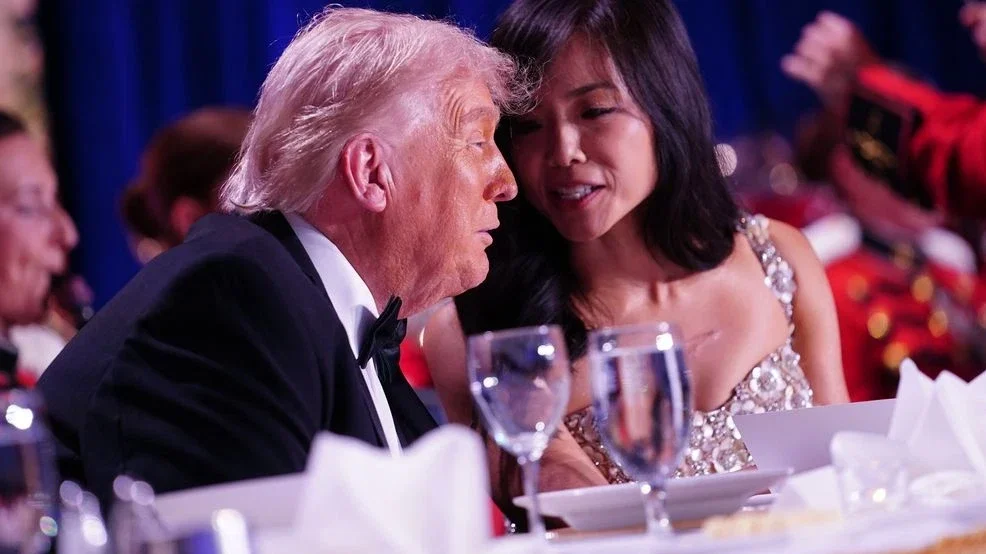
Washington, D.C., April 26, 2026 — For decades, the White House Correspondents' Dinner has occupied a singular place in the capital’s social and political calendar: an evening where power and scrutiny share the same stage, softened by humor. Often dubbed “Nerd Prom,” the event typically blends black-tie formality with satire, bringing together politicians, journalists, and celebrities in a rare display of proximity between those who govern and those who question them.
Under ordinary circumstances, the program follows a familiar script.
At its center are two speeches. The president delivers remarks that are less about policy than performance—aimed at the press, political rivals, and, at times, themselves. The tone is expected to be sharp but playful, a recognition of the unusual setting in which the nation’s highest officeholder becomes the subject of public humor.
This is followed by a featured comedian, whose role is less restrained. Past hosts, including Stephen Colbert, Michelle Wolf, and Trevor Noah, have used the मंच to challenge both media and political figures, often pushing the boundaries of what the room—and the country—will accept.
Beneath the spectacle lies a more serious purpose. Organized by the White House Correspondents' Association, the dinner serves to honor journalistic achievement, award scholarships, and underscore the importance of a free press. It is, in effect, both celebration and statement: a reaffirmation of the role of journalism in a democratic society.
The setting reflects that dual identity. Held in a grand ballroom—most often at the Washington Hilton—the evening draws thousands of attendees. Reporters, elected officials, and cultural figures gather for a multi-course dinner before the speeches begin, their exchanges as much a part of the event as the formal program.
Yet the 2026 dinner departed sharply from that tradition.
What was expected to be an evening of satire and ceremony instead gave way to disruption. A security crisis prompted an evacuation, halting the program before its defining moments could unfold. The anticipated speeches, comedic performance, and awards presentations were all abandoned.
In the hours that followed, attention shifted from the ballroom to the White House itself, where President Donald Trump addressed the nation. The tone, markedly different from the customary levity of the dinner, reflected the gravity of the situation. The evening’s narrative—once intended as a celebration of media and politics—became instead one of security, rhetoric, and response.
Subsequent appearances by the president, including a televised interview with Norah O'Donnell of 60 Minutes, underscored the shift. Exchanges grew combative, and the broader conversation turned toward political tensions, the role of the press, and the language used in moments of national strain.
A Strategic Appearance
The president’s decision to attend the dinner had already drawn attention before the disruption.
During his first term, Mr. Trump declined to participate in the event, frequently criticizing both the press and the dinner itself. His absence became a pattern, often replaced by campaign-style rallies held the same evening.
His presence in 2026 suggested a tactical adjustment.
Attendance at the dinner offers a president a highly visible मंच—one that signals engagement with the press while allowing for direct messaging. In political terms, it can project confidence, convey a sense of normalcy, and place the president at the center of a widely covered national moment.
Such appearances can also reflect broader shifts in strategy. Second-term presidencies often bring recalibration, as leaders balance legacy considerations with evolving political realities.
The First Amendment in Practice—and in Tension
The symbolic weight of the evening extends beyond its social and political dimensions. At its core, the Correspondents’ Dinner is closely tied to the principles of the First Amendment to the United States Constitution.
The amendment guarantees freedoms of speech, press, and assembly—protections that enable journalists to question authority and report without government interference. The dinner, in turn, serves as a public demonstration of those freedoms: a setting in which the president can be openly criticized, even mocked, in a room filled with reporters.
That dynamic is not merely ceremonial. It reflects a broader democratic norm—that power can be scrutinized without reprisal, and that such scrutiny is not only tolerated but expected.
The disruption of the 2026 event, therefore, carried significance beyond the immediate incident.
Although the First Amendment constrains government action rather than private acts of violence, the interruption of an event dedicated to press freedom introduced a symbolic tension. An evening meant to celebrate open expression was instead marked by fear and uncertainty.
The implications are not legal so much as cultural. Incidents of this kind can contribute to a chilling effect, raising questions about the safety of journalists and the resilience of public discourse in an increasingly polarized environment.
An Unsettled Contrast
In its intended form, the White House Correspondents’ Dinner represents a convergence of ideals: humor alongside accountability, access alongside independence.
The events of April 25, 2026, presented a stark contrast.
On one side lies the vision of a democratic society comfortable enough to laugh at itself—even at its highest offices. On the other, a reality in which the spaces designed to embody that openness can be disrupted, revealing underlying tensions that humor alone cannot resolve.